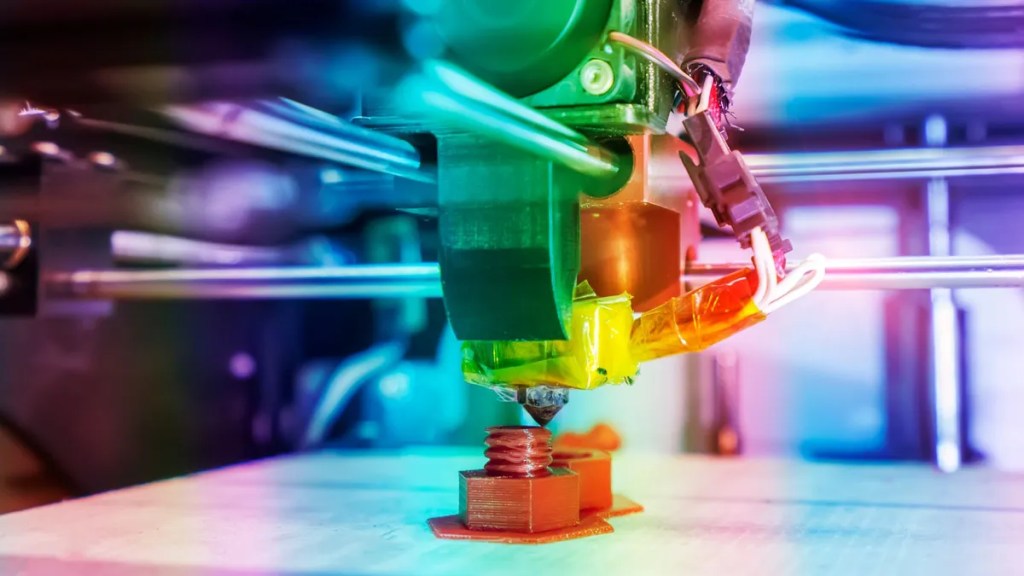
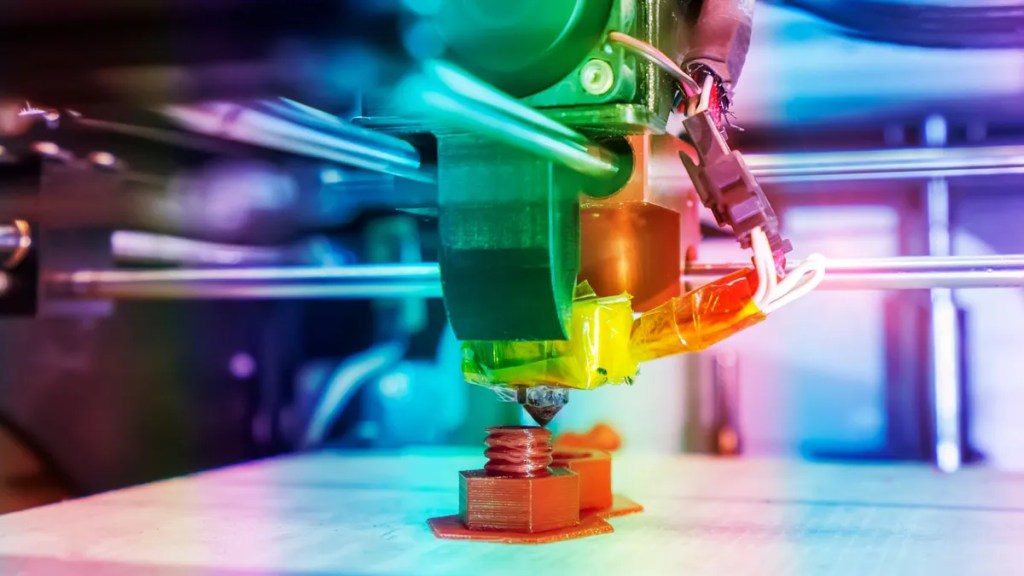
A dual-phase, nanostructured high-entropy alloy that has been 3D printed by researchers from the University of Massachusetts Amherst and the Georgia Institute of Technology is stronger and more ductile than other cutting-edge additively manufactured materials. This discovery could lead to higher-performance components for use in aerospace, medicine, energy, and transportation.
The research was published online by the journal Nature and was headed by Wen Chen, an assistant professor of mechanical and industrial engineering at UMass, and Ting Zhu, a professor of mechanical engineering at Georgia Tech. High entropy alloys (HEAs), as they are called, have gained popularity as a new paradigm in materials science over the past 15 years. They allow for the creation of a nearly limitless number of different alloy designs since they include five or more elements in nearly equal amounts. Brass, carbon steel, stainless steel, and bronze are examples of traditional alloys that mix a principal element with one or more trace elements.
A cross-sectional electron backscatter diffraction inverse-pole figure map displaying a randomly oriented nanolamella microstructure and images of 3D printed high-entropy alloy components are displayed in front of Wen Chen, an assistant professor of mechanical and industrial engineering at UMass Amherst. Additive manufacturing, also called 3D printing, has recently emerged as a powerful approach to material development. The laser-based 3D printing can produce large temperature gradients and high cooling rates that are not readily accessible by conventional routes. However, “the potential of harnessing the combined benefits of additive manufacturing and HEAs for achieving novel properties remains largely unexplored,” says Zhu.
A HEA was combined with a cutting-edge 3D printing method called laser powder bed fusion by Chen and his team at the Multiscale Materials and Manufacturing Laboratory to create novel materials with unheard-of qualities. When compared to traditional metallurgy, the procedure causes materials to melt and solidify much more quickly, which results in “a very different microstructure that is far-from-equilibrium” on the components produced, claims Chen.
The new material resembles a net when viewed at the nanoscale
This microstructure, which resembles a net, is composed of alternating layers of face-centered cubic (FCC) and body-centered cubic (BCC) nanolamellar structures that are encased in small, randomly oriented eutectic colonies. The two phases can cooperatively deform thanks to the hierarchical nanostructured HEA.
Source: interestingengineering.com
 Fortizo Tech-hub
Leave a comment