
In today’s interconnected world, computer networks play a crucial role in facilitating communication, data transfer, and resource sharing. Whether you’re browsing the internet, sending emails, or accessing files on a shared server, computer networks are at the core of these operations. In this blog post, we will delve into the basics of computer networks and explore the role of protocols in enabling smooth communication within these networks.
Understanding Computer Networks: A computer network refers to a collection of interconnected devices, such as computers, servers, routers, switches, and more. These devices are linked together to enable communication and resource sharing. Networks can be categorized into various types based on their scale and geographical coverage, such as Local Area Networks (LANs), Wide Area Networks (WANs), and Metropolitan Area Networks (MANs).
LANs cover a limited area, such as a home, office, or school, while WANs span larger geographical areas and connect multiple LANs together. MANs, on the other hand, cover a larger metropolitan area, like a city. The choice of network type depends on the specific requirements of an organization or individual.
Protocols: The Backbone of Communication: In order for devices in a network to communicate effectively, they must adhere to a set of rules and standards known as protocols. Protocols define how data is transmitted, received, and interpreted within the network. They ensure that devices can understand and interpret data in a consistent and reliable manner.
One of the most widely used protocols in computer networks is the TCP/IP (Transmission Control Protocol/Internet Protocol) suite. TCP/IP provides a standardized set of protocols for transmitting data over the internet and is responsible for the seamless communication between devices across the global network.
TCP/IP divides data into smaller packets before transmission, ensuring efficient and error-free delivery. It also assigns unique IP addresses to each device in the network, allowing for proper identification and routing of data packets.
Other notable protocols include HTTP (Hypertext Transfer Protocol) for web browsing, SMTP (Simple Mail Transfer Protocol) for email transmission, and FTP (File Transfer Protocol) for file sharing.
Networking Devices and Infrastructure: Computer networks rely on a range of devices to function effectively. Routers are responsible for forwarding data packets between different networks, while switches facilitate communication within a network by connecting multiple devices. Hubs, although less commonly used nowadays, act as simple connection points for devices.
Communication within a network can take place through various transmission media, including Ethernet cables, fiber optic cables, and wireless signals. Each transmission medium has its own advantages and limitations in terms of speed, distance, and cost.
Conclusion: Computer networks and protocols are the backbone of modern communication and information exchange. Understanding the basics of networks and protocols allows us to navigate the digital world with greater ease and efficiency. From LANs to WANs, TCP/IP to HTTP, the world of computer networks opens up a myriad of possibilities for seamless connectivity and collaboration. As technology continues to evolve, staying informed about the fundamentals of computer networks and protocols will become increasingly important in our digitally connected lives.

Nanotechnology Demystified – Cont’d
Nanotechnology which deals with the research and development of tech at the nanoscale. The nanoscale is so tiny that it demands really powerful microscopes to view and it takes computer modeling to experiment with this minute world. Applications of nanotech date as old as stained glass used in window art in cathedrals. Those windows are…

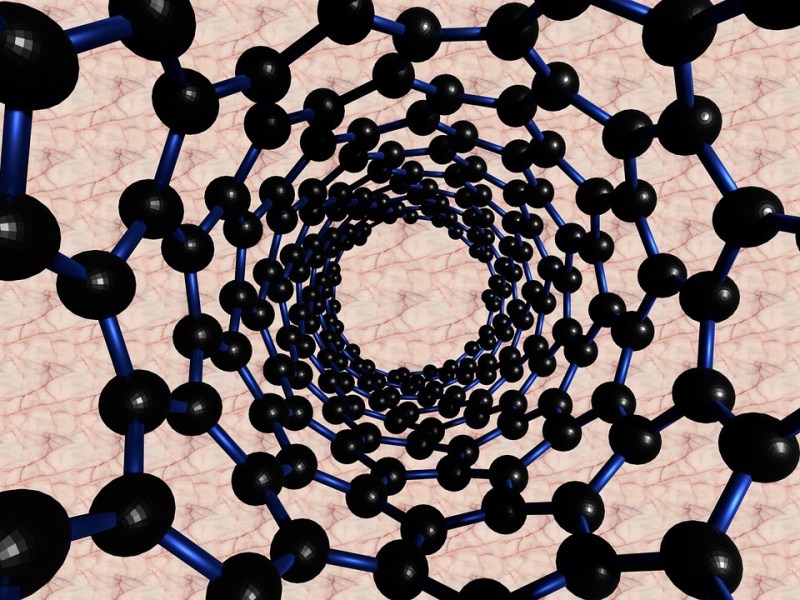
Nanotechnology Demystified Cont’d
Nanotechnology is an exploration of the world that is a billionth of a meter and a millionth of millimeter. Imagine that! You can’t right? It’s too small, we’ll let me help you with this analogy. Comparing a nanoparticle to a marble is like comparing the globe to a ball. You hair grows one nanometer every…

Nanotech Demystified: nanomaterials
Nanotechnology deals with the control of matter at a molecular or atomic level; a scale at which materials demonstrate properties they wouldn’t on a larger scale. Nanotechnology has applications in medicine, electronics and it also promises amongst many things a new frontier of engineering and material science. As mentioned entire the properties of materials differ…

 Fortizo Tech-hub
Leave a comment