
Introduction: In the vast landscape of web development, three core technologies reign supreme: HTML, CSS, and JavaScript. These languages form the foundation of every modern website and provide the tools necessary to create dynamic, visually appealing, and interactive web pages. In this blog post, we will take a beginner-friendly dive into the world of web development, exploring the basics of HTML, CSS, and JavaScript, building static web pages, and touching upon the introduction to front-end frameworks.
- HTML – The Structure of the Web: HTML, short for Hypertext Markup Language, is the backbone of every webpage. It defines the structure and content of a document by utilizing a set of tags. These tags act as containers for various elements such as headings, paragraphs, images, links, and more. HTML provides a standardized way to organize information and create a hierarchical structure that web browsers can interpret and display. Through HTML, we can define the skeleton of a web page.
- CSS – Adding Style and Visual Appeal: While HTML handles the structure of a webpage, Cascading Style Sheets (CSS) takes care of its presentation. CSS allows us to define the visual aspects of our web pages, such as colors, fonts, layouts, and animations. By using CSS selectors and properties, we can target specific HTML elements and apply styles to them. This separation of concerns between HTML and CSS ensures a clean and modular approach to web design, making it easier to maintain and update the styling across multiple pages.
- JavaScript – Interactivity and Functionality: JavaScript brings life to web pages. As a powerful scripting language, it allows us to add interactivity and dynamic functionality. With JavaScript, we can respond to user actions, manipulate HTML and CSS, fetch data from servers, create animations, and much more. It is the programming language of the web, enabling us to build engaging user experiences and web applications.
- Building Static Web Pages: Now that we have a basic understanding of HTML, CSS, and JavaScript, let’s explore how we can use these languages to build static web pages. A static web page is one that does not change its content based on user input or external data. It serves as a starting point for understanding the fundamentals before diving into more complex dynamic web development. By combining HTML for structure, CSS for styling, and JavaScript for limited interactivity, we can create visually appealing and functional static web pages.
- Introduction to Front-End Frameworks: As web development evolves, so do the tools and frameworks available to developers. Front-end frameworks, such as React, Angular, and Vue.js, provide pre-built components and libraries that simplify the process of building complex web applications. These frameworks offer enhanced code organization, modularity, and reusability, enabling developers to create scalable and maintainable front-end projects. Although front-end frameworks require a deeper understanding of JavaScript, CSS, and HTML, they significantly enhance productivity and help create more dynamic and interactive web experiences.
Conclusion: HTML, CSS, and JavaScript form the core trio of web development languages. With HTML, we define the structure of web pages; with CSS, we add style and visual appeal, and with JavaScript, we bring interactivity and functionality to our creations. By understanding these fundamental languages and their roles, we can build static web pages and lay the groundwork for exploring more advanced topics, such as front-end frameworks. Whether you’re a beginner starting your web development journey or an experienced developer looking to refresh your knowledge, mastering HTML, CSS, and JavaScript is essential for creating compelling web experiences.

Nanotechnology Demystified – Cont’d
Nanotechnology which deals with the research and development of tech at the nanoscale. The nanoscale is so tiny that it demands really powerful microscopes to view and it takes computer modeling to experiment with this minute world. Applications of nanotech date as old as stained glass used in window art in cathedrals. Those windows are…

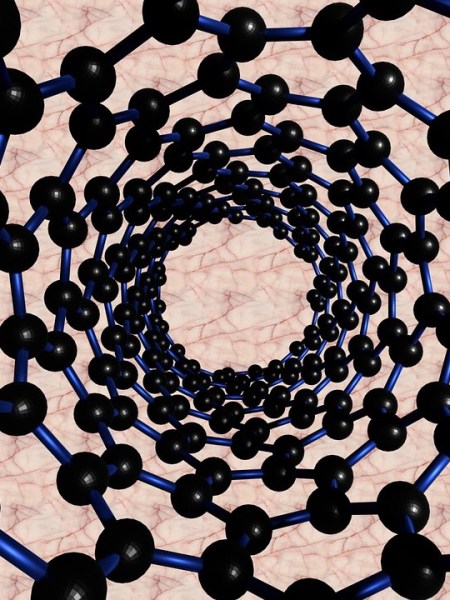
Nanotechnology Demystified Cont’d
Nanotechnology is an exploration of the world that is a billionth of a meter and a millionth of millimeter. Imagine that! You can’t right? It’s too small, we’ll let me help you with this analogy. Comparing a nanoparticle to a marble is like comparing the globe to a ball. You hair grows one nanometer every…
Nanotech Demystified: nanomaterials
Nanotechnology deals with the control of matter at a molecular or atomic level; a scale at which materials demonstrate properties they wouldn’t on a larger scale. Nanotechnology has applications in medicine, electronics and it also promises amongst many things a new frontier of engineering and material science. As mentioned entire the properties of materials differ…

 Fortizo Tech-hub
Leave a comment